The Problem Series

The Buy-In Crisis The System Passed the Audit. Your People Rejected It Anyway.

"If your people will not use the system to run the business, you do not have a management system. You have audit theatre."
Luis Pertence

9001 Plus Consulting Group Co-Founder & Team Leader

The Diagnosis

Your people didn’t fail the system. It failed the only test that matters — does it help them work? The auditor visits once a year. Your team works every day.

INITIAL SITUATION: Your team didn’t resist change — they rejected irrelevance. When a management system mirrors clause structure instead of operational reality, the rejection is immediate, automatic, and correct.
1 1

The project was completed on schedule. The consultant delivered the manuals, the procedures, the forms. Training was held. The certificate arrived. On paper, the implementation succeeded.

In the business, it quietly failed.

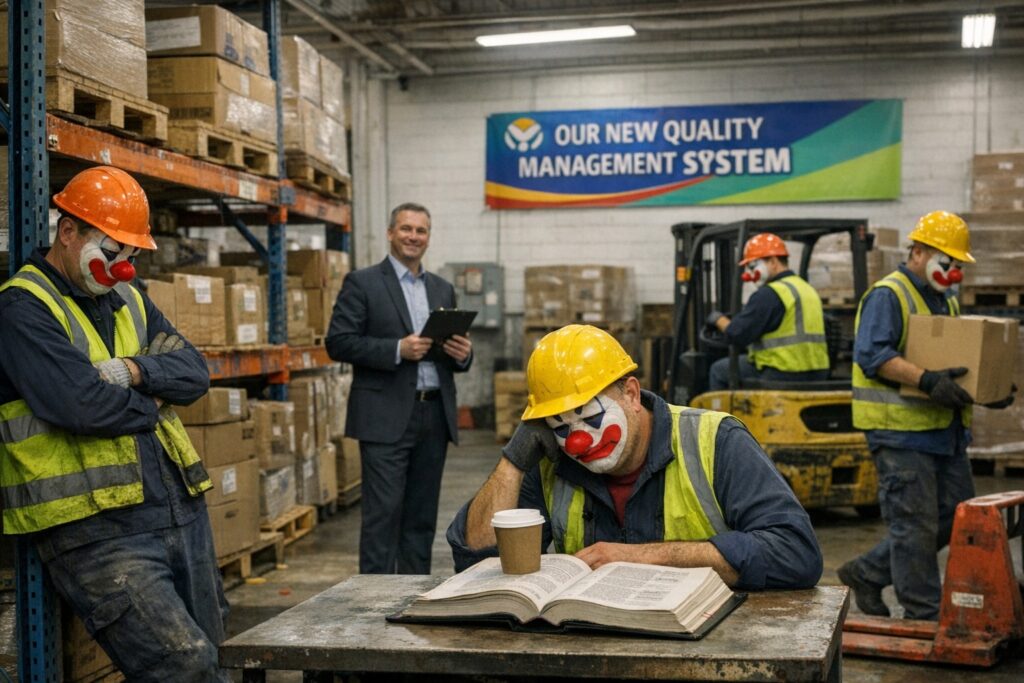
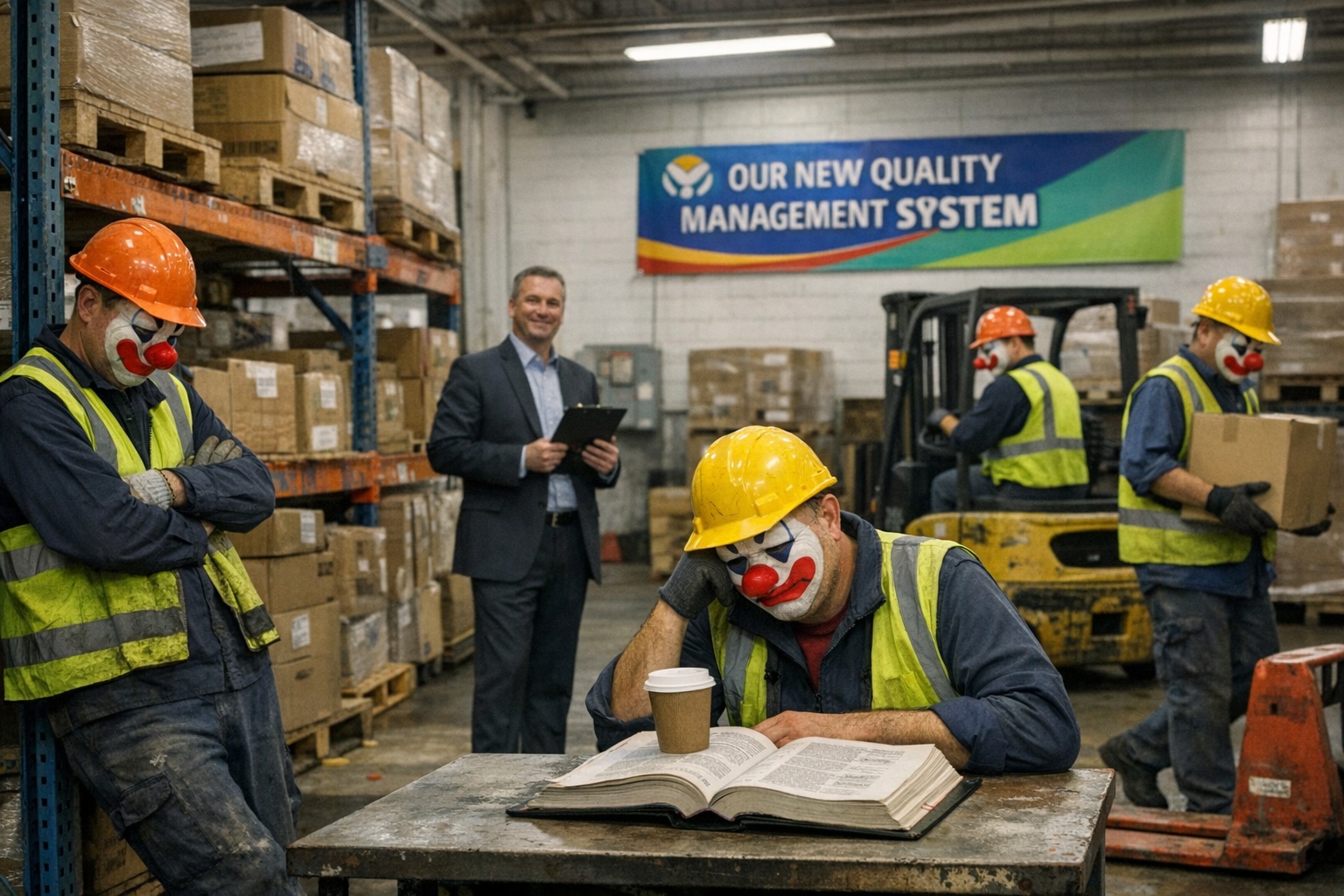
Your people were not resisting change. They were doing something more specific: evaluating whether the system helped them run the work. The procedures described ISO clause requirements, not your operational logic. The forms added handling without adding control. The official process made sense to the auditor, but not to the people expected to use it every day. So your team reached the only conclusion available to them: this system was official, but it was not theirs.

Once that judgment is made, buy-in is over. People may comply when required. They do not commit to a system that makes their jobs harder, reflects their work badly, and exists primarily for someone else’s benefit. What follows is not a culture problem. It is the entirely predictable response to a system that failed the people expected to sustain it.

The consultant optimised for audit day. Your team had every other day to be right about it.

THE MECHANISM: Compliance systems create parallel worlds. One runs your operations. The other only comes alive the week before the audit.
2 2

Once that divide appears, the business starts paying twice for the illusion of control.

The real system lives in spreadsheets, local checklists, verbal coordination, habits and memory built around getting the job done. The other system lives in procedures, controlled forms, registers, and management review packs maintained to prove conformity to an external body that visits once a year.

One runs the business. The other protects the certificate. One is trusted. The other is tolerated.

This is the hidden architecture of most failed ISO implementations. Not absence of documentation. Not lack of training. Not poor communication. A structural split between the system the company says it runs and the system it actually relies on — and a workforce that knows exactly which one is which.

The costs accumulate in ways that never surface clearly on a P&L. Double handling. Duplicated records. Quality staff translating between paper and reality. Management reviews drifting toward findings, overdue actions, and document status instead of margin, throughput, recurring failure, and customer friction. The company stays certified. The management function stops functioning.

What remains is not a management system. It is a management system’s paperwork.
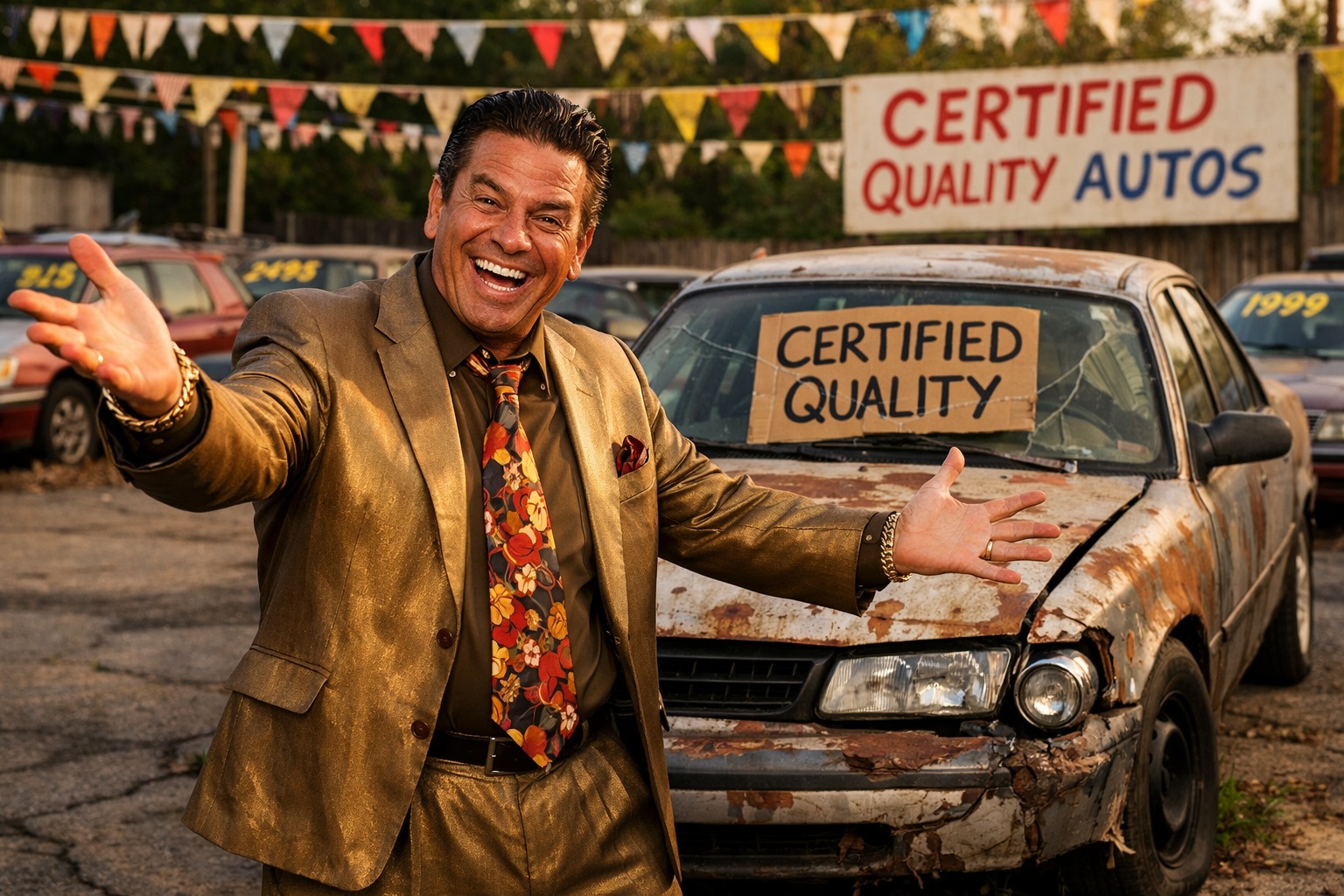
THE CEO CONSEQUENCE: The certificate survived. The system didn’t. Every year it stays in place, trust falls, control weakens, and the next fix costs more.
3 3

As CEO, this is the most expensive part of the arrangement: from the outside, everything still looks intact.

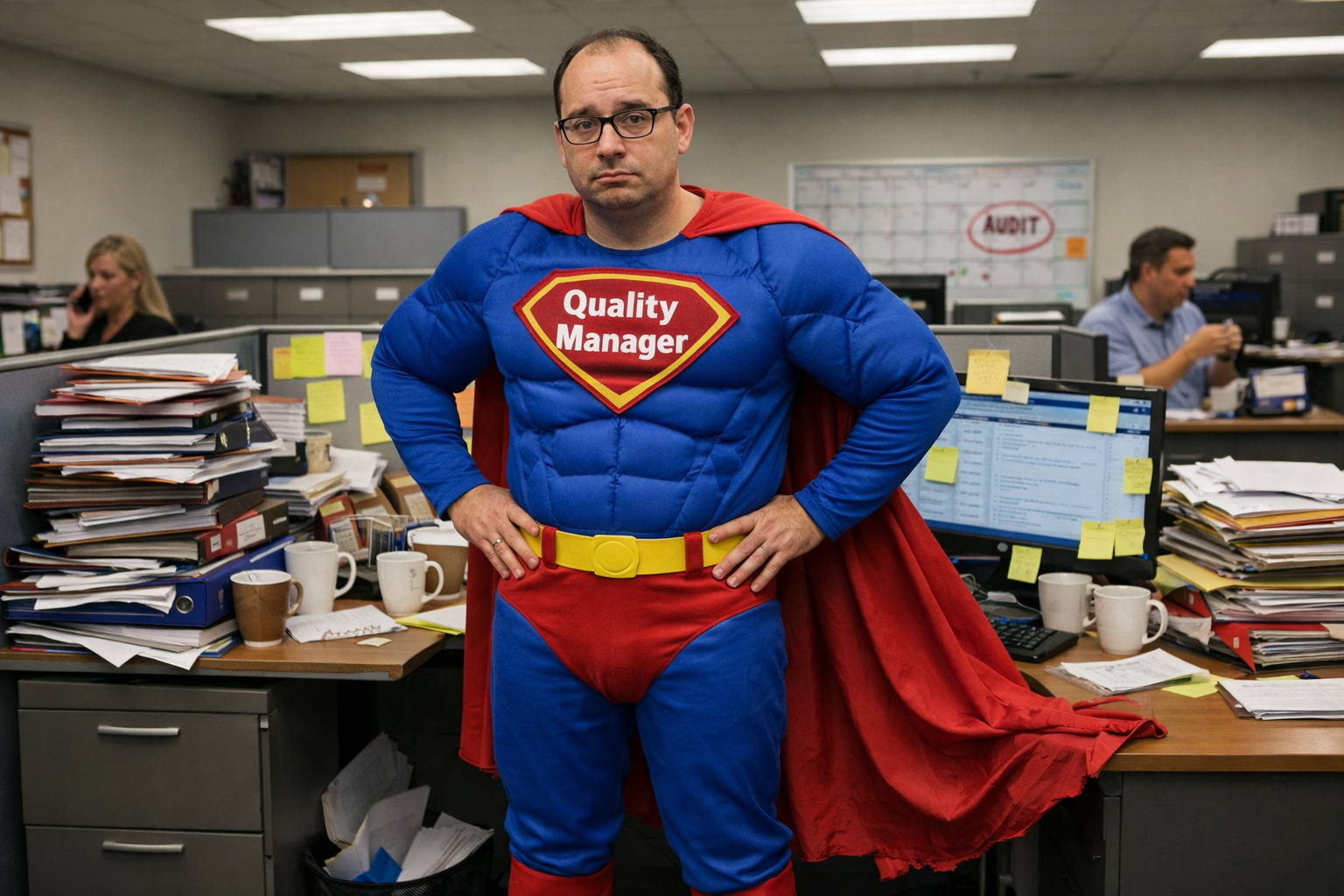
The certificate is framed in reception. The audit passes. The management review happens. The documents sit on the server. What you actually have is a formal shell — visible to the auditor, hollow inside the business, and increasingly expensive to maintain as the gap between the documented system and the real one continues to widen.

The operational consequences are specific. When the formal system has no daily credibility, people stop feeding it. Near-misses are absorbed locally. Recurring inefficiencies are worked around rather than escalated. Improvement opportunities die in corridor conversations instead of entering a system that can act on them. The performance picture flowing into management review describes the documented version of your operations — not the real one. Your decisions rest on a curated version of how the business performs.

The most lasting damage is what happens to the organisation’s capacity for belief. Every management initiative that promises improvement and delivers administrative compliance theater makes a withdrawal from the trust reserve. The lesson accumulates quietly: formal change means extra work without operational value. By the time a genuine effort arrives, it inherits the accumulated evidence of every system that came before it — and the threshold for belief is higher each time.

You can certify a false system. You cannot run a business on one. And the longer it stays in place, the deeper the recovery has to start.

What This Costs You

The Business Consequences

Your procedures describe the standard, not your operations.

Procedures mirror ISO clause structure rather than the logic of your value streams. Staff cannot use them as working tools, so they stop treating them as relevant outside audit preparation — and the gap between documented process and actual practice widens every month.

The real operating system runs the business. The official ISO system is maintained in parallel and updated when audit evidence is needed. That duplication creates hidden waste, extra handling, and permanent friction between what is documented and what is actually managed.

Instead of driving decisions about margin, throughput, recurring failures, and customer friction, management review becomes a ceremony around findings, overdue actions, and document status. Leadership reviews the health of the paperwork, not the health of the operation.

When people disengage from the formal system, they stop feeding it. Near-misses are absorbed locally, inefficiencies are worked around, and improvement opportunities die in conversation instead of entering control. Problems accumulate invisibly until prevention is no longer possible.

Every system that promises improvement and delivers compliance theater leaves a residue the organisation does not forget. By the time a genuine effort arrives, it inherits the accumulated disbelief of every artificial system that came before it — and the threshold for commitment is higher each time.

The Solution

How We Build a System Your Business Actually Runs On

We don’t design around clause structure, audit convenience, or consultant templates. We design around the way your business actually creates value — the processes your people already understand, the performance your leadership needs to control, and the problems your operation actually faces every day.

That means one system, not two. Procedures that reflect real work. Controls that help people perform better. Management reviews that produce decisions about the business, not reports about the certificate.

We are not selling documents that pass an audit. We build management architecture that survives after the consultant leaves — and that your people use every day because it is the best operational tool they have. When that is true, buy-in stops being something you chase. The certificate becomes a consequence of how you run the business, not the reason you run it that way.

Others Common ISO Management Systems Problems

Are You Running the Business — Or Just Maintaining the Certificate?

Take our free self-assessment and see whether your ISO management system is being used to run the business — or merely maintained to protect the certificate.

Related Case Studies